Introduction
Mobile hydraulic systems installed on earthmoving excavators, wheel loaders, mobile cranes, aerial work platforms, and heavy agricultural equipment face unprecedented design demands. Machine operators and fleet owners require higher working speeds, fine proportional control accuracy, reduced fuel consumption, lower noise emissions, and extended maintenance intervals.
To satisfy these aggressive performance targets, original equipment manufacturers (OEMs) are transitioning away from conventional fixed-displacement open-center systems toward advanced load-sensing (LS), electro-hydraulic proportional, and compact high-pressure manifold architectures.
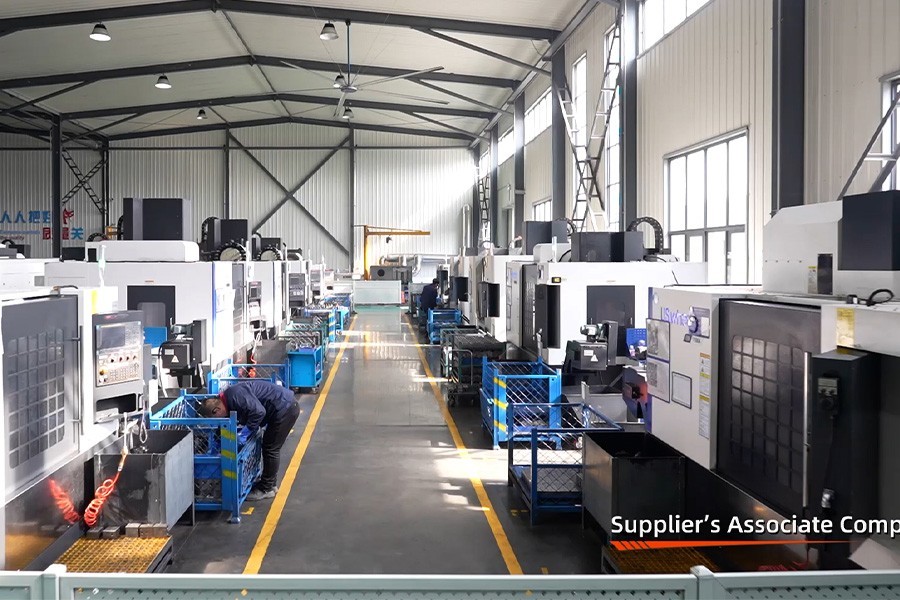
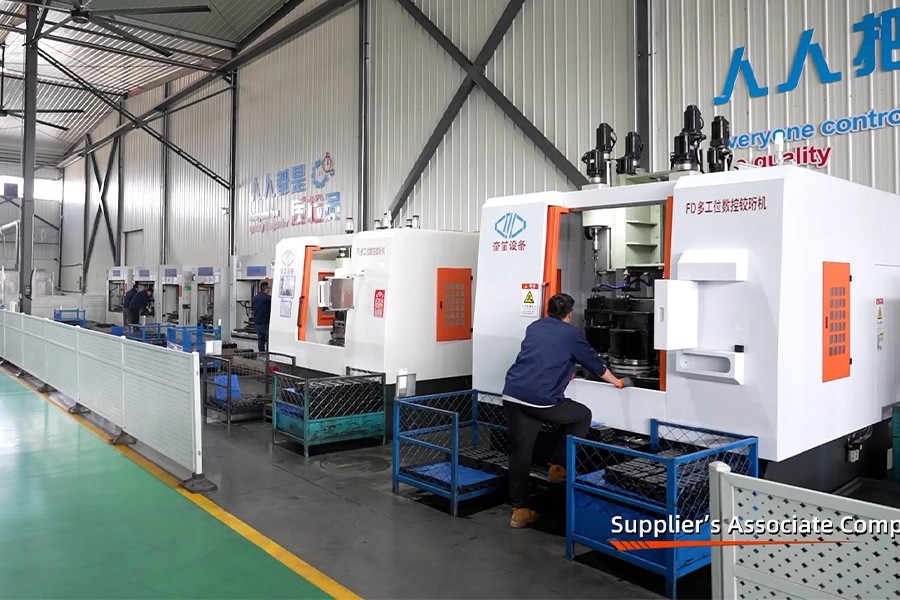
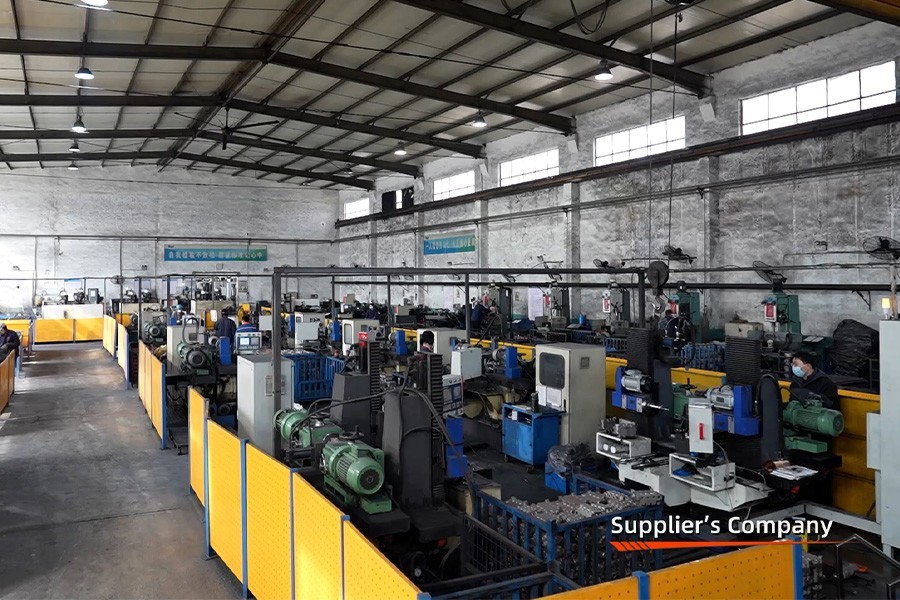
At Boxinhuasheng Hydraulic Technology Co., Ltd., our engineering department works at the forefront of mobile hydraulic development. Operating from our 68,000 m² campus in Qingzhou, China, Boxinhuasheng brings 25+ years of specialized valve and pump manufacturing experience across four modern production plants. Supported by 35 senior hydraulic engineers, 260+ advanced CNC machines, and 30+ automated testing benches certified under IATF 16949 standards, we supply high-pressure directional valves, gear pumps, piston pumps, and PTO units to equipment builders across 80+ countries.
This article provides an technical analysis of four core development trends transforming mobile hydraulic systems architecture.
Trend 1: Adoption of Load-Sensing (LS) and Post-Pressure Compensated Architectures
Conventional open-center hydraulic systems dump excess pump flow across bypass galleries at low pressure when actuators are idle. However, under multi-function operation, fluid naturally takes the path of least resistance, starving heavier loads unless the operator manually meters multiple control levers.
                  ┌────────────────────────────────────────────────────────┐
                  │      LOAD-SENSING (LS) SYSTEM ARCHITECTURE             │
                  └───────────────────────────┬────────────────────────────┘
                                              │
         Highest Work Port Load Signal (P_max) Fed Back via LS Signal Line
                                              │
         Variable Displacement Pump / Inlet Compensator Adjusts Pressure
                                              │
Constant Pressure Differential (ΔP) Maintained Across Spool Orifices- Load-Sensing (LS) Principle: An internal LS signaling network senses the highest active work port pressure ($P_{load}$) across all active valve spools and transmits this signal to a variable-displacement pump control or inlet pressure compensator.
- Energy Conservation: The pump adjusts output flow and pressure to maintain a constant differential pressure ($\Delta P \approx 1.5 - 2.0\text{ MPa}$) above $P_{load}$. When spools return to neutral, pump displacement drops to low-pressure standby mode, saving up to 20-30% in engine fuel consumption.
- Post-Pressure Compensation (Flow Sharing / LUDV): Ensures that when total actuator flow demand exceeds maximum pump capacity, all active actuators slow down proportionally rather than stalling heavier functions entirely.
Trend 2: Electro-Hydraulic Proportional Solenoid Integration and Microcontroller Interface
As off-highway machinery adopts semi-autonomous operation, GPS guidance, and electronic telematics, hydraulic directional control valves must interface seamlessly with vehicle electronic control units (ECUs).
+-------------------------------------------------------------------------+
|                  ELECTRO-HYDRAULIC EVOLUTION METRICS                    |
+--------------------------+-----------------------+----------------------+
| Control Dimension        | Traditional Pilot     | Modern Electro-LS    |
+--------------------------+-----------------------+----------------------+
| Signal Medium            | Low Pressure Oil Lines| CAN-bus / PWM Wire   |
| Cab Plumbing Overhead    | High (Hoses into cab) | Minimal (Electric)   |
| Metering Flexibility     | Fixed Mechanical Curve| Software Adjustable  |
| Hysteresis               | 5% - 8%               | < 1.5% (PWM Dither)  |
| Automation Capability    | Manual Operator Only  | Full Telematics/GPS  |
+--------------------------+-----------------------+----------------------+- Pulse Width Modulation (PWM) Control: Solenoid-operated pilot valves control spool stroke via 12V/24V PWM signals. Superimposing high-frequency AC dither current (100–200 Hz) reduces mechanical hysteresis to below 1.5%, enabling smooth micro-metering.
- Direct CAN-Bus Connectivity: Integrated Solenoid Driver Modules accept J1939 CAN-bus commands directly from vehicle microcontrollers, eliminating bulky hydraulic pilot hoses inside the operator cab.
Trend 3: Compact Ductile Iron Monoblocks Operating up to 31.5 MPa
Vehicle space constraints require hydraulic valve manifolds to deliver higher power density ($kW/kg$) within compact mounting envelopes:
- Ductile Iron Metallurgy (QT500-7): Replacing traditional grey iron housings with high-tensile ductile iron allows internal gallery walls to be thinned while raising continuous working pressure ratings up to 31.5 MPa (315 bar).
- Integrated Valve Cartridges: Main relief valves, port shock valves, anti-cavitation check valves, and load-check valves are integrated directly into the main valve housing, eliminating external line plumbing and potential leak points.
Trend 4: Micro-Contamination Management and ISO 4406 Cleanliness Rigor
As spool-to-bore clearances shrink to sub-micron dimensions (2-micron tolerances) to minimize internal leakage under 31.5 MPa pressures, fluid contamination management becomes a critical operational requirement:
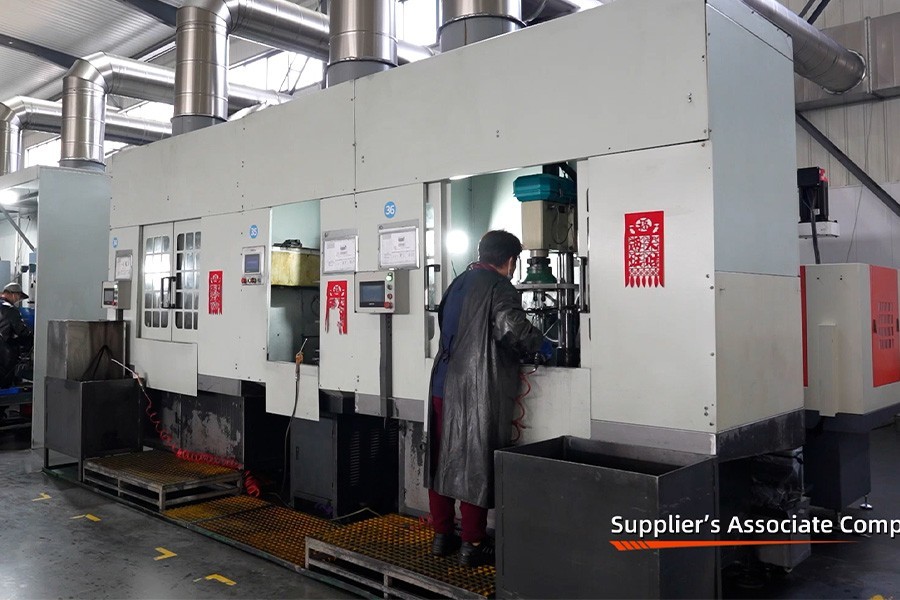
- 5-Stage Ultrasonic Washing: Precision valve housings undergo 5-stage ultrasonic solvent washing and thermal deburring during production to remove microscopic machining chips prior to assembly.
- ISO 4406 Code 16/14/11 Standards: Mobile equipment OEMs enforce strict offline micro-filtration on production assembly lines to ensure zero spool binding during initial machine commissioning.
Buyer Checklist: Evaluating Next-Generation Mobile Hydraulic Suppliers
When establishing multi-year supply contracts for next-generation mobile machinery platforms, procurement directors should verify:
- [ ] Load-Sensing Product Range: Does the supplier manufacture load-sensing (LS) monoblock and sectional valves with post-pressure compensation?
- [ ] Electro-Proportional Solenoid Capabilities: Are solenoids rated for PWM control with low hysteresis (< 1.5%) and IP67/IP69K environmental sealing?
- [ ] Sub-Micron Bore Honing: Is bore roundness held within 0.002 mm (2 microns) via vertical diamond honing?
- [ ] 100% Bench Simulation Testing: Does the factory enforce 100% end-of-line workload simulation testing across 100% of finished valves (Boxinhuasheng tests 100% across 30+ benches)?
Conclusion
The development of mobile hydraulic systems is driven by load-sensing energy efficiency, electro-hydraulic proportional control, compact high-pressure metallurgy, and strict contamination management. Machinery OEMs that integrate these advanced hydraulic technologies build equipment with superior fuel economy, precise control, and long-term operating durability.
Boxinhuasheng Hydraulic Technology Co., Ltd. applies 25+ years of hydraulic manufacturing expertise, 35 senior engineers, 1.5 million units annual capacity, IATF 16949 quality certification, and SGS factory verification to lead mobile hydraulic development.
To consult with our mobile engineering team, download 3D CAD models, or request technical catalog specifications, visit www.chinesehydraulic.com.